
Can sound support better sleep?
Researchers at Stanford and MIT have been studying a sound-based method that may replace sleeping pills entirely.[1][2]
The solution they’ve been working on has already been featured on the Huberman Lab Podcast, gone viral across social media, and attracted serious attention from the sleep science community.[3]
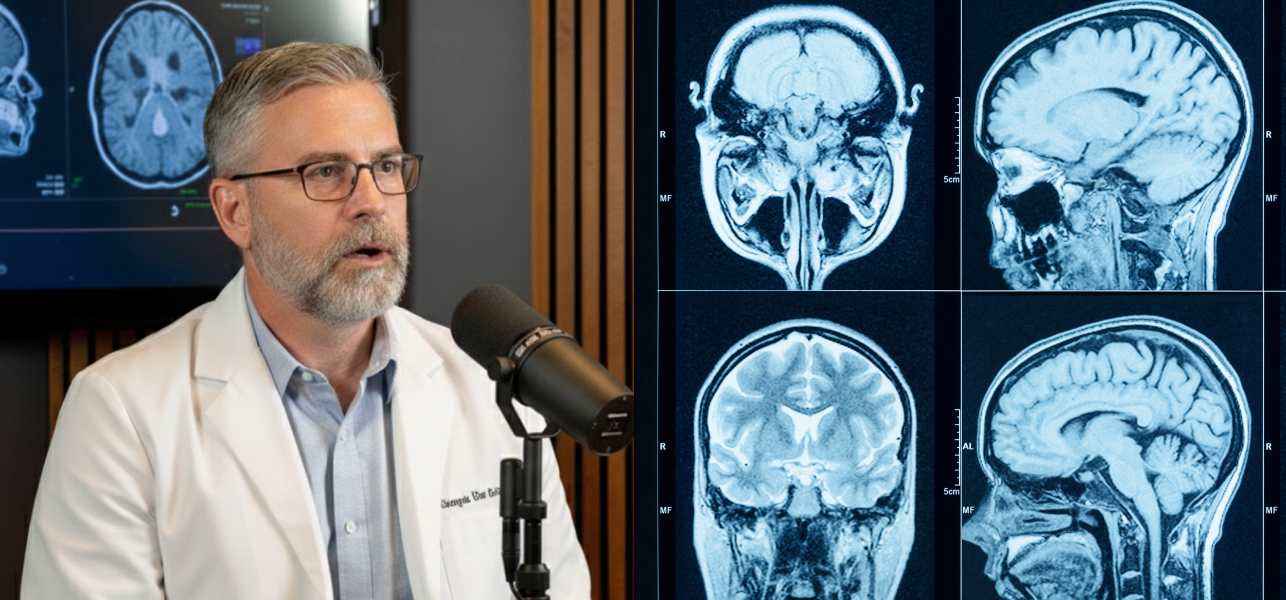
To understand what's behind it, we invited neuroscientist Dr. Adrian Corvell – who specialises in insomnia brain pathologies – to explain what's actually going on.
"You’ll be surprised by how well this method works,” he says.
Dr. Corvell Reveals 3 Truths About Sleep That The Pharmaceutical Industry Doesn't Want You To Know
As we got deeper into our conversation, three things stood out to us:
1 – Sleeping Pills And Aids Don’t Fix Insomnia, Here’s What They’re Really Doing to Your Brain
“Have you noticed waking up tired after taking sleeping pills to fall asleep?” asks Dr. Corvell.
That’s because while pills can knock you out, they disrupt your brain’s deep sleep waves.
In fact, you may end up waking up in the middle of the night because pills don’t actually help you achieve deep sleep.
So, instead of recharging fully, you end up groggy, unfocused, and exhausted the next day.
Beyond poor-quality sleep, there may be serious side effects like:
Some people might say, “Why not just take something natural, like melatonin?”
“Melatonin isn’t quite the miracle it’s made out to be, " says Dr. Corvell.
Sure, it can help you fall asleep faster, but it may also reduce your deep, restorative sleep.[10]
So in the end, you could be spending money on something that actually makes your sleep worse.
2 – Every Night You Don't Fix This, the Sleep Debt Gets Harder to Repay
"Sleep debt builds up fast," warns Dr. Corvell.
"Lose just a couple of hours each night, and by week's end you've built up 14 hours of debt — enough to make your brain and body perform as if they haven't slept in days."
The longer this goes on, the harder it becomes to reverse.
Chronic sleep deprivation doesn't just leave you tired.
It impairs memory, weakens immunity, and significantly raises the risk of long-term neurological damage.
Every night without a real fix is another night the debt compounds.
3 – Backed by Stanford and MIT: The New Sound-Based Method That Re-Trains the Brain to Sleep
Neuroscientists are increasingly exploring sound as medicine.
At MIT, researchers discovered that specific sound frequencies can help improve brain health.[1]
Stanford took this further, testing binaural beats designed to guide the brain into restorative sleep.
The outcome was remarkable: 75% of patients showed improvement in insomnia symptoms, including trouble staying asleep, poor sleep satisfaction, impaired daytime functioning, and increased emotional distress.[2]
What are binaural beats — and why do they work?
Binaural beats are created when two tones with slightly different frequencies are played into each ear separately.[13][14]
Your brain merges them into a single tone that influences brainwave activity.
Here's why that matters for insomnia: a healthy brain naturally produces theta waves as you drift off, which then transform into delta waves and guide you into deep sleep.[15]
In insomniacs, these waves are often weaker or irregular, leaving the brain stuck in high alert mode.
Binaural beats work by guiding the brain back into natural sleep rhythms.
Before You Open YouTube And Hit “Play” On A Random Binaural Beats Track, Here’s What Dr. Corvell Wants You To Know
“There’s a reason why these studies are done in labs,” says Dr Corvell, “it helps us identify exact conditions for a treatment to work.”
According to him, binaural tracks on popular platforms like YouTube and Spotify are compressed and re-encoded.
“It’s a precise science, so you need something that’s specifically calibrated for the brain,” he adds.
Until recently, this kind of brain-calibrated sound therapy was only available inside research labs at places like MIT and Stanford.
But it’s becoming more accessible.
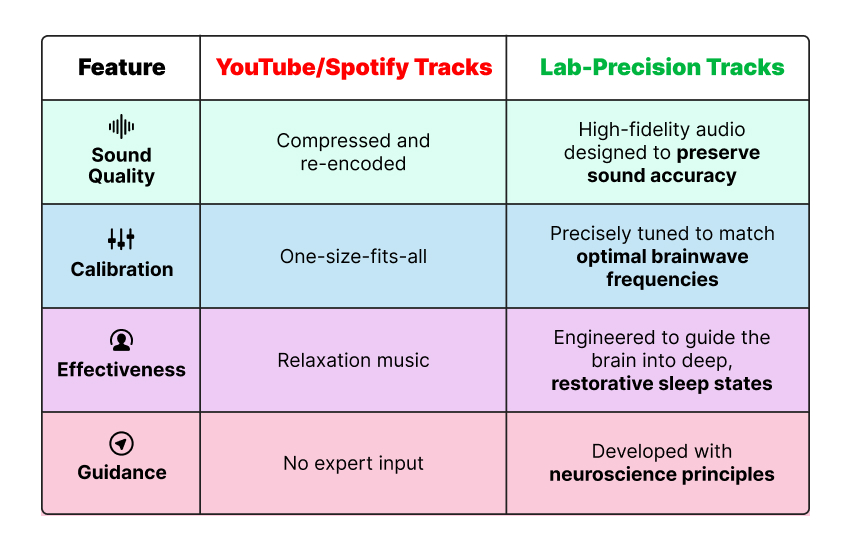
Dr. Corvell points to a solution with lab-like accuracy and a 95% success rate
“Since talking more publicly about the potential of binaural beats for insomnia treatment, I have companies contacting me with their products.
Until recently, none truly matched the precision or results seen in clinical studies.
That’s until I came across InnerFlo – a platform that brings lab-like accuracy and custom sleep interventions to everyday users,” he explains.
Most importantly, they offer combined benefits that other solutions don’t have:
- You feel the effects in under 15 minutes, not hours.
- Unlike supplements, the results are immediate, helping you fall asleep the very first night.
- It’s completely effortless: just press play and let the beats do the work.
And getting started is simple.
You take a quick sleep assessment to pinpoint your unique challenges and receive a personalized daily routine.
Start with a quick quiz to find out what's behind your sleep issues →
Finally, a Safe Alternative To Sleeping Pills – Now at a Special Price for Health Horizon Readers
“I truly believe solutions like this represent the future of sleep therapy,” says Dr. Corvell.
Unlike traditional treatments or prescription pills, InnerFlo is easy to access, affordable, and completely non-invasive.
And for a limited time, Health Horizon readers can try it with a special offer.
So, if you’ve been looking for a way to fix your sleep, now is the best time to act.
Take the free sleep quiz to uncover what’s been blocking your rest and lock in your discount before it’s gone.
Don’t wait until another sleepless night piles into a dangerous sleep debt. Get a guided sleep routine.
Results may vary due to personal features