

Our readers have been flooding Health Horizon with questions about the trending 'stress reset' audio frequencies for stress and anxiety.
Mentioned on the Huberman Lab Podcast and highlighted by top U.S. research institutions like Yale, the topic has gained massive attention.
So I reached out to two renowned specialists – both were happy to speak with me.
Dr. Max Renner, a leading neuroscientist specializing in neural recovery, and Dr. Lila Hartman, clinical psychologist focused on stress.
"Paralyzing mental noise and anxiety have reached pandemic levels in the U.S., with rates now several times higher than just three decades ago[1].
The average American spends about $1,080 per year on mental health[2]," Dr. Renner says.
"The worst part? People burn out and drown in debt just to see a therapist," Dr. Hartman adds.
I asked both experts to comment on what American institutions are uncovering and share their verdict on audio-based 'stress reset' methods.
Interestingly, my guests' answers pointed in the same direction – this approach might be the most underestimated shift in modern mental health.
3 little-known scientific facts about brain activity reveal why the audio-based Stress Reset is the only right lever
At the start of our conversation, both experts laid out the scientific groundwork behind their claims.
Truth #1: Your nervous system runs on electrical frequencies – like a radio station
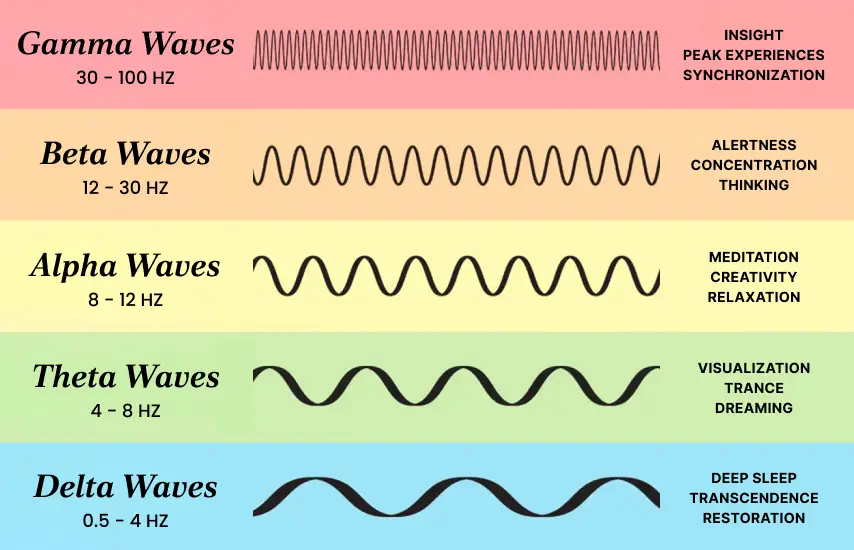
"Every emotion, thought, and state of mind is tied to specific brainwave frequencies, measured in Hertz.
These rhythms shape how we feel: calm, stressed, or stuck in mental noise[3][4]," Dr. Renner says.
"When the system falls out of sync, the result is a brain that simply won't quiet down."
Turns out, understanding these frequencies is the key to reducing the stress response.
Truth #2: Everyday stimuli and chronic stress disrupt your brain's natural frequencies
"Your brain isn't built for nonstop pings, social media scrolls, and YouTube ads – but that's what it gets every day.
These inputs don't just make you feel worse – they literally disrupt the brain's natural rhythm, which rarely rebalances on its own.
This leads to stress and the sense that your mind just won't turn off," says Dr. Hartman.
EEG studies confirm that chronic stress and overstimulation alter brainwave patterns in measurable ways[5].
Truth #3: Studies confirm you can't fix a frequency problem with pills, talks, or stretches – there is only one way to do it
You can't talk, stretch, or medicate your way out of a disrupted frequency pattern – these methods don't directly rebalance the brain's electrical activity.
"This kind of problem lives in the rhythm of your nervous system," states Dr. Renner, "so it needs a rhythmic solution.
That's why audio-based programs, using precise frequencies, are gaining attention from serious neuroscience labs.
The most effective audio technique is called binaural beats[6] – two slightly different frequencies are played into each ear, at the same time," he concludes.
In controlled studies, it showed a clear, consistent calming effect, with anxiety scores dropping by nearly 30%[6].
"Even more compelling, a large-scale meta-analysis of over 20 studies confirmed that targeted sound protocols reduce anxiety and improve emotional regulation[7][8].
This isn't experimental – it's gaining ground as one of the most promising non-invasive tools in neuroscience, with a growing body of research from leading institutions."
– Dr. Max Renner, neuroscientist
And, for the first time, it's being made accessible: "This Stress Reset turned out to do wonders to my clients," Dr. Hartman says
"I came across the use of binaural frequencies early in my clinical work.
It was mentioned at a neuroscience conference in Berlin in spring 2025, where researchers from Columbia and Yale Universities were presenting their work[9].
They showed how audio frequencies could shift brain states within minutes," she says.

"I managed to get access to several of their tested audio protocols and started using them with my clients.
The results were unlike anything I'd seen before," Dr. Hartman says.
"People unresponsive to other methods noticed a real shift in under 7 minutes."
The best part? Actually, it works on any internet-connected device with a screen – phone, tablet, laptop, personal computer.
Before You Open YouTube And Hit "Play" On A Random Binaural Beats Track, Here's What Dr. Hartman Wants You To Know
"There's a reason why these studies are done in labs," says Dr Hartman, "it helps us identify exact conditions for a treatment to work."
According to her, binaural tracks on popular platforms like YouTube and Spotify are compressed and re-encoded.
"It's a precise science, so you need something that's specifically calibrated for the brain," she adds.
Until recently, this kind of brain-calibrated sound therapy was only available inside research labs at places like MIT and Stanford.
But it's becoming more accessible.
By contrast, dedicated platforms maintain bit-accuracy, frequency precision, and timing consistency to ensure real neural responses.
Columbia, Yale, and others laid the groundwork for now-booming audio platforms – one of them offered our readers an exclusive deal
It started with studies at places like Columbia and Yale, where researchers mapped how sound affects neural states.
The early groundwork of these studies is now powering a new wave of platforms designed to apply those findings in real life.
One of them reached out after hearing about our conversation – and prepared a special offer exclusively for Health Horizon readers.
What caught our attention most, though, was the data. According to user-reported results:
- 97% feel immediate nervous system relaxation;
- 84% notice calmer thoughts within 15 minutes;
- and 91% report long-lasting anxiety relief after using the program regularly.
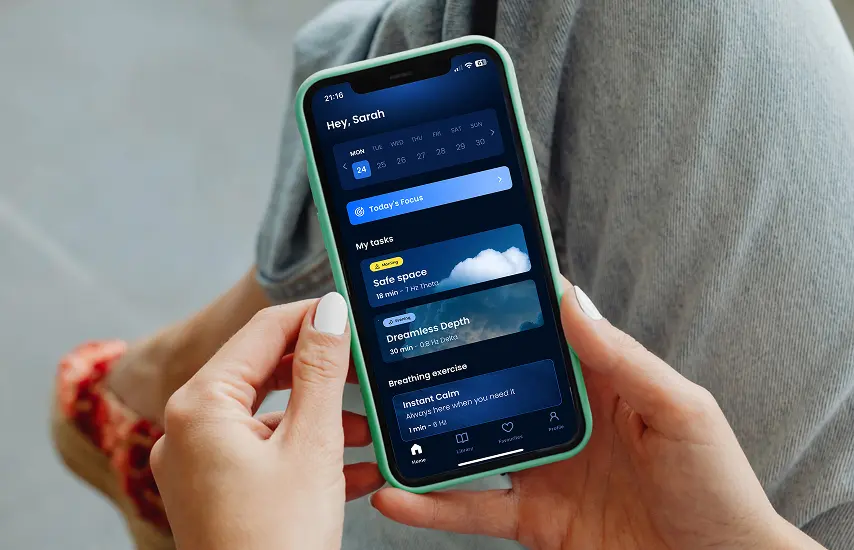
The platform is called InnerFlo – and it's built entirely around personalized binaural beats protocols.
- Using short diagnostic input, it maps your individual stress pattern and assigns precise binaural beat protocols.
- It guides you through a personalized routine – no effort needed.
- Sessions are short, between 5 to 30 minutes.
Research confirms that regular short sessions are fully sufficient to trigger measurable improvements.
All it takes is a quick 2-minute quiz – it shapes your personalized Stress Reset protocol and unlocks the only way to get 55% off
Just answer a few simple questions and get access to a tool that's already helped thousands.
You don't need to commit to anything, and it's a much more affordable route than therapy sessions, prescriptions, or supplements.
The effects are real – and there's a 30-day money-back guarantee.
The ideal ‘Stress Reset’ looks different for everyone
Get a guided binaural beats routine tailored to your needs
Results may vary due to personal features